
Ward County Court Calendars Explained
Ward County posts more than one kind of schedule. The county News page links an official 2026 "Arraignment, Pre-Trial and Trial Docket" PDF. The 143rd Judicial District Court page adds annual schedules and standing orders. The district serves Loving, Reeves, and Ward counties. Treat these as calendar artifacts built around court business, not as full case-search databases.
The setting type tells you what a line means. Arraignment, pre-trial, trial, jury week, and grand-jury impanelment each serve a different purpose. A public entry may leave out party names, cause numbers, later resets, and results. Note the court, the county, and the schedule year. Also note any amended label before trusting a Ward County court calendar as current.
Ward Dates in a Three-County District
The 143rd Judicial District Court covers three counties. Its annual trial schedule is one district-wide document. Loving, Reeves, and Ward activity can all fold into it. That means a date tied to the district is not automatically a Ward County setting. Check that the county label and the cause record agree.
Check the county line. Match “Ward” on the schedule with the court and cause number in the clerk record before making travel plans.
This matters most when you spot a jury week or grand-jury date with no case caption attached. The schedule shows court planning, while the District Clerk's file shows which Ward County case holds a particular setting. Never merge all three counties into one informal list.
Finding Your Court Date
Start with the court named on your notice, citation, bond paper, or prior order. A felony belongs to the District Clerk. So does a divorce or a district civil matter. A constitutional county-court case goes to the County Clerk. Justice and municipal matters stay with the named precinct or city court.
- Open the county News schedule, the 143rd District Court schedule, or re:SearchTX Hearings for a participating electronic case.
- Use the cause number when available. Otherwise narrow by party name, court, county, case category, and date.
- Open the case detail and distinguish a future setting from a filing date, order date, or disposition.
- Confirm the date, time, setting type, and reporting place with the responsible clerk, court administrator, or attorney.
Ward County offers four practical channels: an online schedule or hearing search, the clerk's phone or office, official courthouse and County News postings, and the party's attorney. A paper notice or docket call can also control. The clerk posts no live public calendar terminal, so a phone call remains the surest way to confirm a near-term date.
Trace a Ward Calendar Notice
A citation trail keeps an old download from masquerading as a current notice. Save the official page URL, the exact document title, the calendar year, the publication or update date, the court name, the county, and the setting class. Then go back to the source page each time instead of trusting a detached copy.
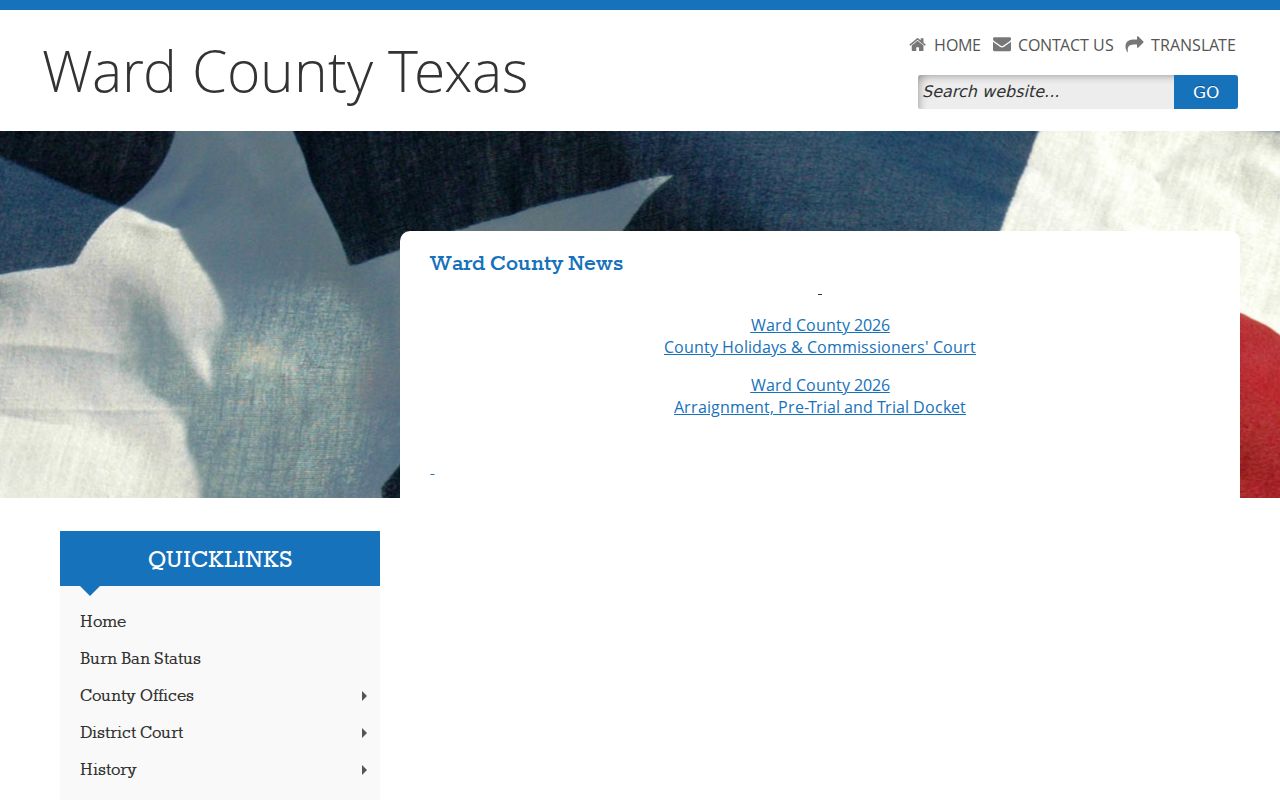
This is the county notice channel, not a live case record. If the source page posts a newer PDF or marks a notice amended, rely on the newer official version. Then verify any imminent appearance.
How to Read a Court Setting
Read every setting as a scheduled event, never as a judgment. The most useful fields show who published the calendar, which court and county it covers, and what kind of event the date represents. Leave blank fields blank rather than guessing at them.
| Date | The scheduled date shown in the current notice or case detail. |
|---|---|
| Time | A docket-call time or individual time only when the source prints one. |
| Courtroom | The room or reporting place printed for that event, not a general assumption. |
| Judge | The assigned or presiding court information shown on the source. |
| Setting Type | Arraignment, pre-trial, hearing, trial, jury week, or grand-jury setting. |
A filing date marks when the clerk accepted an item. A setting date marks when an appearance or court event is planned. An order date records court action. Mix those up. An accurate docket turns into an inaccurate calendar.
Ward Settings Are Not Outcomes
A trial setting does not prove a trial happened. A pre-trial setting shows no plea, ruling, or dismissal. A grand-jury impanelment date reveals nothing about evidence, witnesses, charging decisions, or any protected proceeding. Only a later docket entry, a filed order, or a clerk-confirmed disposition supports a statement about the outcome.
- Setting
- A scheduled appearance or court event.
- Reset
- A proceeding moved to another date; the reason should not be guessed.
- Disposition
- The court system’s recorded description of how a case or charge ended.
- Order
- A court action whose effect should be read from the filed document.
This vocabulary helps most when the public schedule lists no party names. A missing name can reflect calendar design or confidentiality, not the absence of a case.
Continuances, Resets, and Cancellations
A continuance or reset moves a proceeding; a cancellation removes or changes a listed event. Ward County promises no real-time sync among a PDF, the clerk system, and re:SearchTX. So a schedule can stay online. A case may already have moved.
Look for an amended label on the source page. Then compare the individual case docket. Then call the clerk or court administrator. A lawyer for the party is another sound confirmation channel. A setting that vanished does not mean the case was dismissed, and a freshly posted date never overrides a direct court order without confirmation.
Ward Jury Weeks and Reporting
Jury weeks appear on the 143rd District Court schedule as blocks of reserved time. One week does not equal one trial date. Cases get called, passed, settled, or reset within that span, so treat a jury week as planning rather than a promise about your individual hearing.
The District Clerk's jury information tells jurors to report to Suite 202. That direction applies to jury service and nothing else. It does not mean every Ward County hearing happens in that suite. Jurors should rely on their summons. They should also follow the clerk's current instructions. Parties take the location from their own case notice or from the court once confirmed.
If You Miss a Court Setting
Call the court listed on your case papers right away, along with the clerk handling the file. Have the cause or citation number ready, plus the case type, the date you missed, and a phone or email where you can be reached. If a lawyer represents you, tell that attorney immediately. Staff can walk you through scheduling and record questions. What they cannot do is give legal advice.
Missed a Setting? A missed date can have serious case-specific consequences, which may include a failure-to-appear entry, warrant, or bond action.
Ask the clerk or attorney how to verify the present case status and whether a new setting has been entered.
Consult a licensed attorney about a missed Ward County setting before appearing or taking action based only on an online notice.
Ward Payment Screens Do Not Set Dates
Monahans Municipal Court sends eligible payments through a vendor. That payment screen is not a municipal docket. Seeing a balance or a payment option tells you nothing about your next appearance. It does not prove compliance either. A citation lookup on that screen leaves most of the court docket unseen.
For a city citation, find the court printed on the ticket. Then ask the municipal clerk for the appearance date. A Ward justice-court citation goes to its own precinct instead. The County Clerk plainly excludes traffic tickets from its office, so routing every traffic-date question there only slows things down. The separate court path is laid out in the Ward County traffic ticket route.