
Getting Ward County Court Records
Route the request to the right office first. The Ward County Clerk holds county-level criminal, civil, probate, juvenile, and mental-health case files. That office does not handle every case type. Traffic tickets, felonies, divorces, and child-support cases go elsewhere, per its own page. The District Clerk keeps the 143rd Judicial District Court filings. Those include felony and district family matters. Justice courts and municipal courts each keep their own limited-jurisdiction files.
If one route fails, try the others. Ward County links an online LGS search for court records. Anything absent from it may need an office visit. re:SearchTX adds a statewide electronic layer for participating offices. Full Ward County coverage is not promised. A quick call to the proper clerk can confirm custody, cost, and request steps. Mail is listed for District Clerk business. A records request is not the same thing as a filing.
- Identify the court, case type, party name, and date range.
- Give the case or cause number when known.
- Choose inspection, electronic delivery, plain copy, or certified copy.
- Confirm the current charge and accepted channel.
- Keep the clerk response with the delivered record.
Ward County Record Custodians
Ward County's chief routing problem is the split between clerks. Send a request to the wrong office. You may get a blank result even though the case exists. County Court categories go to the County Clerk. The District Clerk serves the 143rd District Court for Ward, Loving, and Reeves counties. Set search filters to include Ward where possible.
| Record | Custodian | Limit |
|---|---|---|
| County criminal, civil, probate | County Clerk | Traffic and felonies excluded |
| Felony, divorce, district family | District Clerk | Three-county district |
| Class C and small claims | Correct justice court | Precinct matters |
| City ordinance case | Municipal court | City file |
Appellate material may be split between the originating clerk and the 8th Court of Appeals. Ask which part you need before ordering.
Ward County Court Record Types
A court record comes in layers. The index identifies the matter. The docket lists events, filings, settings, and orders. Images can include petitions, indictments, motions, responses, judgments, or exhibits where released, and a certified copy adds clerk certification. Calendars, minutes, rules, and fee sheets are companion records, not the whole file.
- Case index and public party fields
- Docket sheet and event chronology
- Pleadings, motions, and responses
- Signed orders and judgments
- Plain, electronic, or certified copies
Name the layer you need. A portal result may list a case without its documents, a download is not automatically certified, and a hearing line does not prove an outcome.
Ward County LGS Record Route
The County Clerk points to LGS Online Solutions as its online-record route. The office still tells people to visit for records not found there, which matters for older files, images outside the public tier, and cases another clerk holds.
View the official source for the Ward County online entry screen before searching.
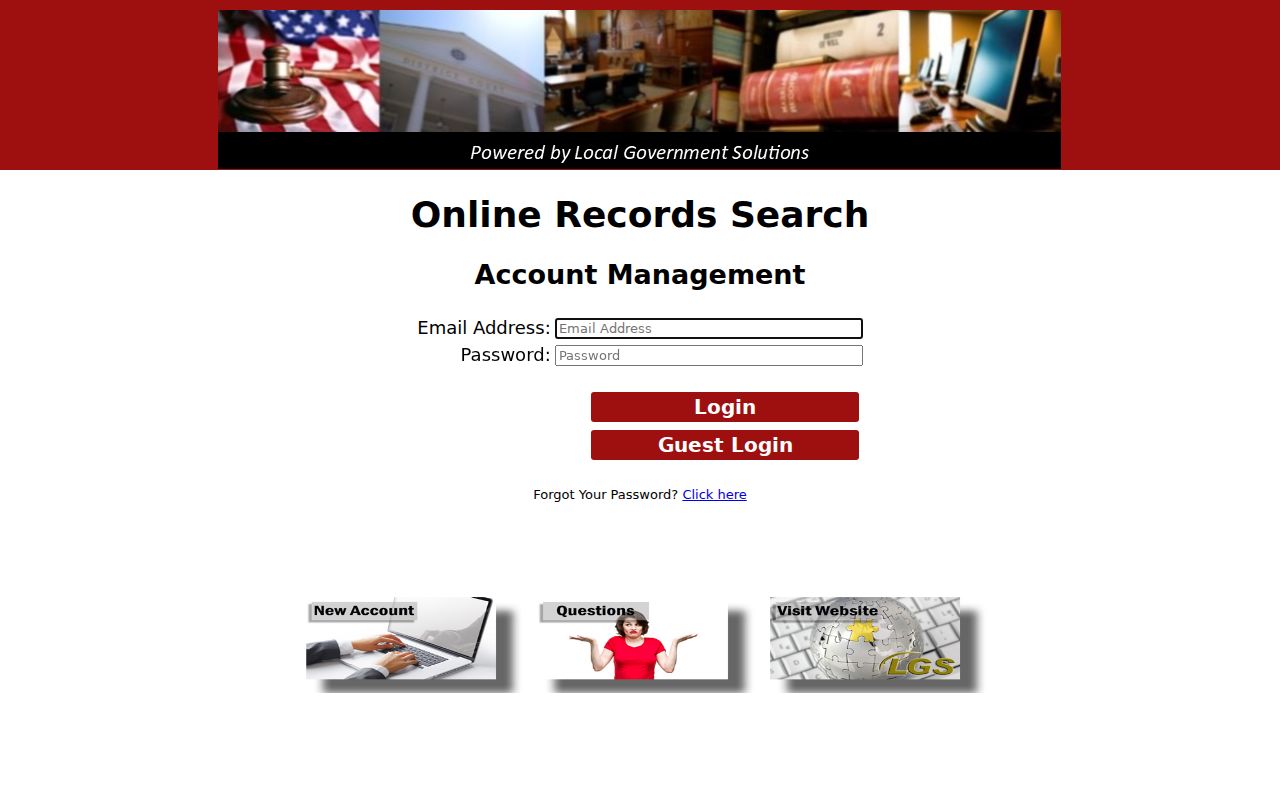
That screen is an entry point. It is not proof that every Ward County court record is digitized. If nothing appears, note the terms you used. Then contact the custodian with the court, number, date, and record type. Staff can tell a name mismatch from offsite storage, restriction, or another court.
Inside a Ward County Court Record
Read each field with care. A filing date marks when a document was accepted or indexed, not always the event itself. A setting is planned, not a result. Read any order before stating its effect, and expect public copies to omit protected data.
| Case number | The court identifier, such as WARD-CASE-NUMBER. |
|---|---|
| Style and type | Public caption and category, sometimes shortened. |
| Docket entries | Filing, event, setting, and order notes. |
| Documents | Released pleadings, motions, responses, or exhibits. |
| Orders and judgment | Signed action checked for later changes. |
| Access status | Public, paid, redacted, withheld, or clerk-only. |
The Ward County case lookup can locate a case before a full file request.
Ward County Offsite Record Path
Some originals sit offsite with a preservation company, the District Clerk reports. The clerk can request a copy. A normal return runs about a day. Timing depends on volume and return speed, which is a guide, not a guarantee.
For an older record, give the court, cause number, title, date, and format wanted. Ask whether the clerk will obtain the copy and whether certification is available. Historical researchers can also start with the Ward County Archives. That page never replaces the active clerk's certified file.
Note: Offsite custody can add time. Confirm delivery and certification needs before relying on a planned deadline.
Fees and Certified Copies
A plain copy just reproduces the item. A certified copy bears clerk certification or seal. State portal pricing and local charges are different contexts. The current clerk fee sheet and direct confirmation control the Ward County amount.
| Item | Reviewed amount |
|---|---|
| Applicable district-clerk search without docket number | $5 |
| Certified paper copy under Chapter 51 text | $5 certificate plus $1 per page |
| Noncertified paper copy | $1 per page |
| Electronic document | $1 through 10 pages, then $0.10 per page |
| re:SearchTX document | $0.10 per page, $1 minimum |
Check the current provision in Government Code Chapter 51. Do not merge these lines into one universal rate.
Ward County Clerk
400 S Allen, Suite 101
Monahans, TX 79756
432-943-3294 or 432-943-3295
Ward County District Clerk
P.O. Box 440
Monahans, TX 79756
432-943-2751
Ward County Electronic Record Limits
re:SearchTX can show cases, filings, text, and hearings for integrated offices. It may also sell images. eFileTexas is a filing system. Public access through one does not follow automatically from a submission through the other.
Participation, integration, account access, and record rules all shape what appears. A missing Ward County document calls for the local clerk and preservation route. Do not assume it went unfiled. A portal index, a purchased image, and a certified copy are three distinct products.
Sealed Records and Public Access
Texas Rule 12 covers judicial records and permits restriction under the rule, another law, or an order. The Texas courts policy explains why judicial records differ from agency administrative records. Chapter 552 governs qualifying public information but offers no path around sealing or confidentiality.
Access rule: A blank result may reflect sealing, redaction, juvenile confidentiality, nonintegration, or another custodian. Ask whether a public order or redacted copy exists.
Review the official Texas request policy source before selecting a request law.
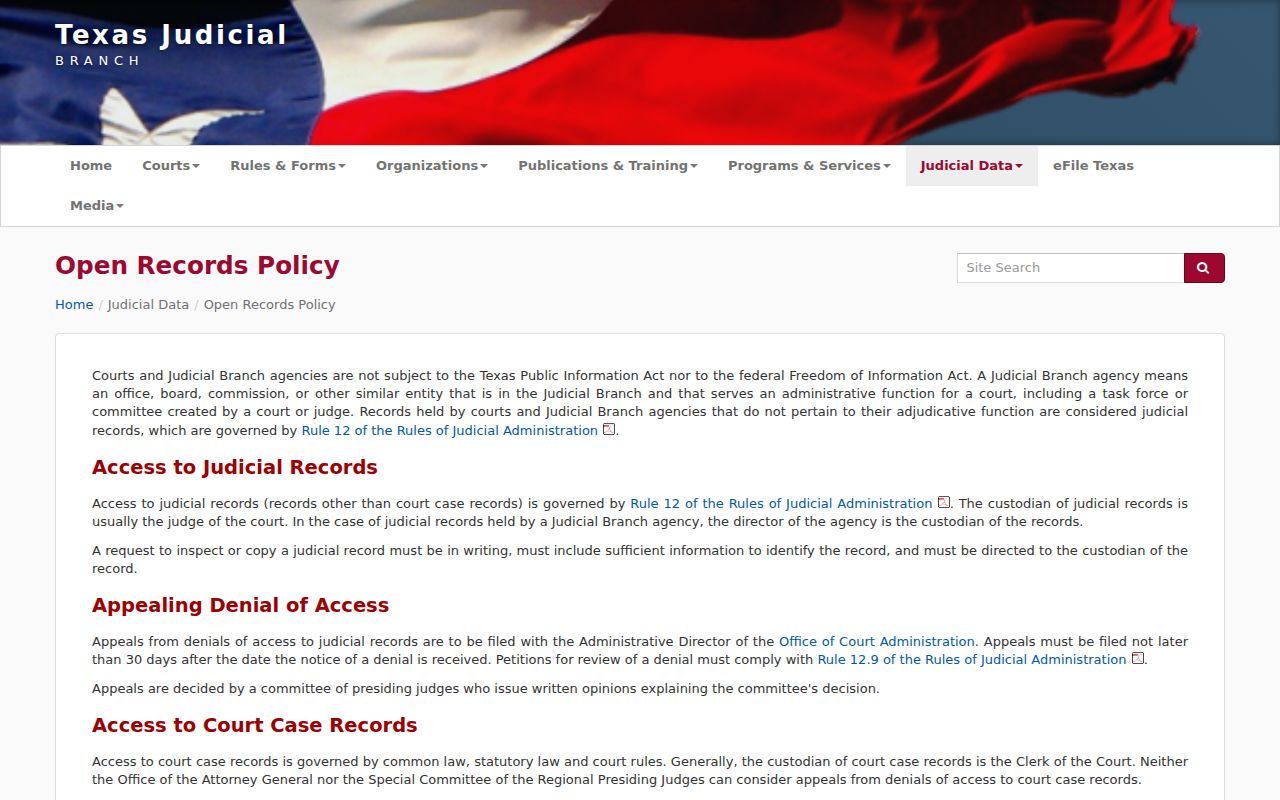
Under that policy, the office holding the Ward County record should answer the request.
Ward County Request Checklist
Ask for records by name in a Ward County docket request. Give the court, the county, the cause number, and the public party name. Add the document title and an approximate date. Say what format you want and whether you need a certified copy. Include your contact details so the clerk can send a cost estimate. Ask up front how payment works.
One caution on delivery. The District Clerk does not accept official district filings by fax or email. Filings go through eFileTexas or U.S. Mail instead. A request for an existing court record is not always a filing, though. Confirm the right channel before you send anything. When you keep copies, write down where each one came from. Add the date you pulled it. An older download then never gets mistaken for the current record.
For strength of evidence, rank your sources. A live Ward County court docket or a certified copy from the clerk beats everything else. Official portals come next, then state tools, rules, fee orders, and public notices. If two sources show different dates or status terms for the same case number, keep both. Ask the clerk which entry controls. A simple log helps here. Note the record title, court, cause number, format, certification status, cost source, delivery method, URL, and date checked. Any later check of the court records becomes far easier to verify.